
The shocking story of grave reuse, corpse abuse, and cemetery abandonment at Eastern, Greenwood, and Schardein cemeteries in Louisville, Kentucky, and how the community is fighting to preserve these sacred spaces.
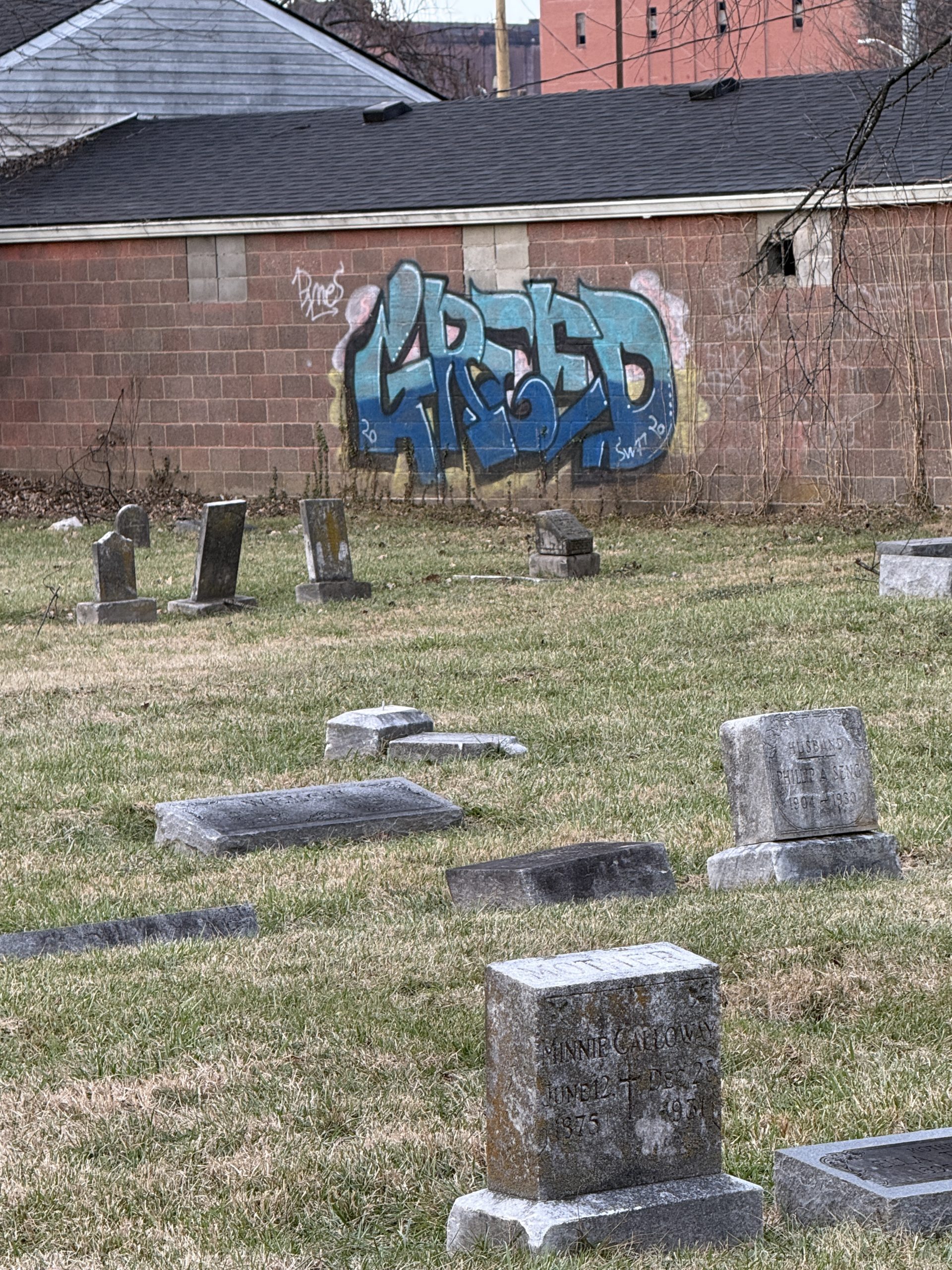
In 1989, a whistleblower exposed one of the most disturbing cemetery scandals in American history. The Louisville Crematory and Cemeteries Company had systematically desecrated tens of thousands of graves across three Louisville cemeteries over nearly a century, selling already-occupied graves to unsuspecting families and scattering human remains like refuse. The revelations shocked the nation and left three historic cemeteries—Eastern, Greenwood, and Schardein—abandoned and falling into ruin.
Today, more than three decades after the scandal broke, these cemeteries remain largely neglected, maintained only by dedicated volunteers and community organizations. Understanding this dark chapter in Louisville’s history is essential for genealogists, families seeking ancestors, and anyone interested in cemetery preservation and the importance of documenting these sacred spaces before their stories are lost forever.
The Three Abandoned Cemeteries
The Louisville Crematory and Cemeteries Company owned and operated three cemeteries in Louisville, all of which served predominantly working-class and African American communities:
Eastern Cemetery
Located at 641 Baxter Avenue, Eastern Cemetery is the largest of the three at 28 acres. Originally known as “The Methodist,” the grounds were purchased by two Methodist Episcopal churches and used for burials beginning in 1844, making it one of Louisville’s oldest cemeteries (LPM 2023; Atlas Obscura 2026). Eastern was notable as one of the first cemeteries in Louisville to bury people of different races, ethnicities, and religious backgrounds without restriction, in contrast to segregated cemeteries like Cave Hill (LPM 2023).
The cemetery hosted Louisville’s first crematorium, with the original facility constructed in 1937 and a modern building erected in 1957 (Find a Grave 2026). As of 2017, Eastern contains approximately 16,000 marked graves but has documentation for an estimated 138,000 bodies—a staggering discrepancy that reveals the scope of the overburial practices (Wikipedia 2025; WDRB 2024).
Greenwood Cemetery
Greenwood Cemetery, located at 40th and Hale Avenue in west Louisville, spans approximately 21-22 acres and was established in 1903 (WHAS 2023; Spectrum News 2025). The cemetery became known as a prominent African American burial ground, serving as the final resting place for hundreds of Black veterans and notable Louisville figures including Alberta Jones, the first woman named city attorney in Jefferson County; Henry Fitzbutler, Louisville’s first Black physician; and Elijah P. Marrs, who helped establish what became Simmons College of Kentucky (WDRB 2024; WLKY 2023).
Like Eastern, Greenwood suffered from systematic grave reuse. Investigators estimated approximately 15,000 too many bodies had been buried at Greenwood Cemetery (Kentucky Kindred Genealogy 2019). The cemetery fell into severe disrepair after abandonment, with overgrown vegetation, downed trees, and deteriorating headstones making it nearly impossible for families to locate loved ones’ graves (WLKY 2023).
Schardein Cemetery
The smallest of the three at approximately 3 acres, Schardein Cemetery is located in the Taylor Berry neighborhood near Churchill Downs (WDRB 2024). Though less documented in media coverage of the scandal, Schardein suffered similar mistreatment under Louisville Crematory ownership. In 1998, property from Schardein was sold to the Kentucky Department of Transportation for road widening, generating $29,849.29, though these funds were later subject to investigation regarding proper accounting (Commonwealth of Kentucky v. Phillips 2003).
The Scandal Unfolds: A Whistleblower’s Courage
In May 1989, Bob Allen, a gravedigger and maintenance worker who had worked at the cemeteries for eight years, contacted the Kentucky Attorney General’s office with disturbing allegations. Allen reported that he believed Louisville Crematory and Cemeteries Company was hiding “a terrible something” (University of Louisville Law Library 2025). What investigators uncovered would shock the nation and expose nearly a century of systematic desecration.
The Investigation: Uncovering Decades of Abuse
Attorney General investigator James Caldwell, working alongside University of Louisville archaeology professor Philip DiBlasi, began excavating graves at Eastern and Greenwood cemeteries. What they discovered was horrifying and went far beyond what anyone had imagined.
Systematic Grave Reuse Since 1907
The investigation revealed that the practice of reusing graves had been occurring since at least 1907, when Eastern Cemetery reached its maximum designed capacity. Evidence suggested the practice may have begun as early as 1858, with cemetery records noting “OG” or “Old Grave” in burial logs (Friends of Eastern Cemetery 2017; Atlas Obscura 2026). The company would wait approximately twenty years between burials—long enough for families to stop visiting—before marking graves as “old” and reselling them to new families (University of Louisville Law Library 2025).
According to findings from the Attorney General’s office, the Louisville Crematory and Cemeteries Company may have buried as many as 48,000 people in previously occupied graves in Eastern and Greenwood cemeteries alone (WDRB 2024; Kentucky Kindred Genealogy 2019). Archaeological examination revealed that graves containing the remains of three or four people were “a common occurrence,” with some graves found to contain as many as six or even seven bodies, particularly infant graves (Kentucky Kindred Genealogy 2019; Employers Insurance v. Martinez 2001).
Disturbing Burial Methods
The methods used to accommodate new burials were shockingly cavalier. According to witness testimony, workers would use a backhoe to dig into existing graves, causing remains to disperse throughout the dirt and scatter across the cemetery grounds. Dirt used for new burials often contained bones from previous interments, which employees reportedly covered with tarps to prevent families from seeing them during burial services (University of Louisville Law Library 2025).
In a section of Eastern Cemetery called “Babyland,” the practice was particularly egregious. Remains from previous burials were found so frequently that cemetery workers buried approximately 70 infants only 10 to 18 inches deep in a desperate attempt to avoid disturbing bones from earlier burials (Kentucky Kindred Genealogy 2019; University of Louisville Law Library 2025).
Bob Allen, the whistleblower gravedigger, told investigators that during the mid-1980s, he dug 650 to 700 graves per year at both cemeteries, and “98 to 99 percent of them” already contained human remains (Kentucky Kindred Genealogy 2019; Courier-Journal 1999).
Human Remains Scattered Throughout the Grounds
Perhaps most disturbing was how carelessly human remains were treated. During the investigation, Caldwell found human bones scattered throughout Eastern Cemetery:
- In a truck’s glove compartment
- In a tool box
- In a storage shed
- In dirt piles
- Even in a fast food bag
In the crematory’s cellar, investigators discovered the remains of 244 cremated bodies, many of them unidentified (University of Louisville Law Library 2025; Kentucky Kindred Genealogy 2019). Buried gravestones were also uncovered during excavations, evidence that markers had been removed to facilitate grave reuse (Kentucky Kindred Genealogy 2019).
As Dr. Philip DiBlasi stated at the time, “It may be beyond the abilities of most people to comprehend just what has gone on out here” (Kentucky Kindred Genealogy 2019).
Criminal Charges and the Failure of Justice
In July 1989, three executives of the Louisville Crematory and Cemeteries Company were indicted on 60 criminal charges:
- Charles Alexander, Jr., Executive Director
- Clifford Amos, Former President of the Board
- Robert Copeland (also spelled Copley in some records), Former Vice President
The charges included corpse abuse, grave desecration, theft by deception for selling used graves, improper handling of burial payments, and failure to maintain trust funds for perpetual care and future burials. Investigators determined that the perpetual care trust funds were short $117,940 (University of Louisville Law Library 2025; Kentucky Kindred Genealogy 2019).
All three executives resigned from the company board immediately upon indictment, and a receiver was appointed to oversee the company’s remaining operations (University of Louisville Law Library 2025).
No Jail Time: A Pre-Trial Diversion
Despite the horrific nature of the crimes and the scale of the abuse affecting tens of thousands of families, no one ever served a day in jail. The defendants agreed to participate in a pre-trial six-month diversion program with the stipulation that they could no longer work at or be part of the operations of the company. Citing the defendants’ advanced age and lack of previous criminal records, the judge dropped all charges after the diversion program (University of Louisville Law Library 2025; Employers Insurance v. Martinez 2001).
The lack of jail time for those responsible left many in the community outraged. As one official noted at the time, while trust fund shortfalls generated concern, it was the reuse of graves and scattered human remains that truly angered the public (Kentucky Kindred Genealogy 2019).
The Abandonment: Cemeteries Left to Decay
After the indictments and scandal exposure in 1989, Eastern, Greenwood, and Schardein cemeteries were essentially abandoned. The Louisville Crematory and Cemeteries Company was administratively dissolved in 1992 (WDRB 2024). The receiver, Beth Campbell (who had married investigator Jim Caldwell), eventually retired. With no funds to pay employees, the utilities were cut, and all remaining operations ceased (University of Louisville Law Library 2025).
Burials would continue at the cemeteries, but only under heavily restricted conditions. Families with pre-purchased plots could still use them, but only after an archaeologist inspected the plot to ensure no other bodies were present (University of Louisville Law Library 2025).
Professor DiBlasi took custody of the cremated remains that were still stored in the chapel and columbarium after numerous break-ins at Eastern Cemetery. He worked to return these remains to families and was able to reunite nearly half of them with surviving family members before his retirement in 2018. He also had the remaining cemetery records digitized for preservation (University of Louisville Law Library 2025).
The cremated remains that could not be returned to families are now in the permanent custody of the University of Louisville Department of Anthropology (Find a Grave 2026).
The Lasting Impact on Families and the Deceased
The ramifications of Louisville Crematory’s abuses continue to devastate families more than three decades later. Thousands of families who purchased burial plots in good faith discovered their loved ones had been buried on top of multiple other bodies. Many families have no way of knowing exactly where their ancestors are buried or how many other people share those graves.
As one volunteer stated when reflecting on the older sections of Eastern Cemetery, “Especially on the older ones, there’s no telling how many other occupants are on top. I’d really hate to turn over the dirt and see” (WDRB 2024).
Lost Graves and Missing Records
The destruction and falsification of cemetery records has made it nearly impossible for many families to locate their ancestors’ graves. Original records were either destroyed, falsified to cover up grave reuse, or have disappeared entirely. Shayla Brown spent years searching for her brother James’s grave at Greenwood Cemetery. He died in 1985 at just four years old and had only a marker, not a headstone. Brown was eventually told by an archaeologist that it would likely be impossible to find his grave because “the original records of his whereabouts were erased out of the record book” (WLKY 2023).
Brown’s mother used to make decorations—crosses, flowers, and other items—and place them where she thought her son was buried, never knowing if she was at the right location (WLKY 2023). Stories like this are tragically common for families with loved ones buried in these three cemeteries.
Dignity Denied in Death
The desecration extended beyond just the reuse of graves. Human remains were treated as trash, scattered carelessly, and stored in containers meant for food and tools. The dead were denied the basic dignity and respect that every human being deserves, regardless of their socioeconomic status or race.
When new headstones were finally placed at previously unmarked graves decades later, the inscriptions acknowledged this abuse. The headstone for Thomas Fountain Blue and his wife at Eastern Cemetery, placed in 2022, includes an engraving that recognizes “the history of abuse at Eastern Cemetery” (LPM 2023). As the epitaph on many stones now reads: “They are not forgotten” (LPM 2023).
Current State: Volunteers Fighting to Preserve History
More than thirty years after the Louisville Crematory scandal, Eastern, Greenwood, and Schardein cemeteries remain in legal and financial limbo. All three cemeteries are currently in receivership and controlled by Jefferson Circuit Court. A trust held by PNC Bank was established for the cemeteries’ care, but the perpetual care fund generates minimal usable interest (WDRB 2024; Atlas Obscura 2026).
Eastern Cemetery: Slow Recovery
The Friends of Eastern Cemetery, formed in 2013, has been the primary force behind restoration efforts at the cemetery. Volunteers started mowing the overgrown grass and clearing debris after seeing news coverage of the abandoned cemetery’s deplorable condition (LPM 2023). Through years of dedicated work, the Friends have made substantial progress in restoring Eastern’s appearance and dignity.
The organization coordinates regular cleanup events, advocates for placement of headstones at unmarked graves, and works to document the cemetery’s history and residents. However, the 28-acre site requires ongoing maintenance that stretches volunteer resources thin.
Community members can support these vital preservation efforts by donating to Friends of Eastern Cemetery at friendsofeasterncemetery.com. Donations help fund ongoing maintenance, headstone restoration, cemetery documentation projects, and the long-term preservation of this historic Louisville cemetery.
Greenwood Cemetery: Honoring Black Veterans
At Greenwood Cemetery, the National Association for Black Veterans (NABVETS) and the Greenwood Cemetery Community Partners, organized in 2023, have taken on the monumental task of maintaining the 21-acre cemetery and honoring the more than 800 predominantly African American veterans buried there (WDRB 2024; Spectrum News 2025).
Volunteers conduct basic maintenance including grass trimming, removing downed tree limbs, and mapping veteran graves. However, the challenges are immense. A large oak tree that fell nearly five years ago still covers several graves, and volunteers estimate they will need special equipment to clear the wreckage and restore those gravesites (Spectrum News 2025).
Lloyd Davis of NABVETS summed up the volunteer effort poignantly: “I talk about God, and a few people, and God and a few people have kept it down to where it is now. And I thank him for sending a few people and I know that he will continue to send a few more” (WDRB 2024).
Mike King, president of Greenwood Cemetery Community Partners, has called for more administrative control and sustainable long-term solutions. He advocates for Metro government to establish a standalone, government-supported foundation with control over the cemeteries and adequate resources for maintenance (WDRB 2024).
In 2023, Metro Councilwoman Tammy Hawkins passionately called on the mayor and Metro Parks to take over the private property, partner with local groups, and transform the cemetery into the respectable final resting place it deserves to be (WLKY 2023).
Schardein Cemetery
Information about current conditions and volunteer efforts at the 3-acre Schardein Cemetery is limited in recent media coverage, though the cemetery faces the same legal and maintenance challenges as its larger counterparts.
The Urgent Need for Cemetery Documentation
Given the scale of the Louisville Crematory scandal and the destruction of cemetery records, comprehensive documentation of Eastern, Greenwood, and Schardein cemeteries is more critical than ever. Thousands of graves remain unmarked or difficult to locate. Headstones are weathering and becoming illegible. Without systematic documentation efforts, the identities of those buried in these cemeteries—and their stories—risk being lost forever.
Time and Erosion Are Working Against Us
As Jeff Shontz of Greenwood Cemetery Community Partners explained, “When a cemetery goes neglected for even as short as five years, that’s enough opportunity for erosion to actually cover a surface gravestone completely” (Spectrum News 2025). Every year that passes without comprehensive documentation means more graves become impossible to identify, more family connections are severed, and more history disappears.
The Role of Technology in Preservation
Modern technology offers powerful tools for cemetery documentation that weren’t available when these cemeteries were abandoned in 1989. GPS mapping can precisely locate every grave, even those with damaged or missing markers. Digital photography preserves headstone inscriptions before they weather away completely. AI-powered optical character recognition (OCR) can extract text from damaged or weathered stones that are difficult for humans to read.
Platforms like TAFOFILE.COM are specifically designed to address these challenges, combining AI technology with GPS mapping to create comprehensive digital records of cemeteries. Such documentation serves multiple vital purposes: helping families locate ancestors’ graves, preserving historical records, supporting genealogical research, and creating a permanent digital archive that survives even if physical markers deteriorate or disappear.
How You Can Help: Community Documentation Efforts
The task of fully documenting Eastern, Greenwood, and Schardein cemeteries is too large for any single organization. It requires a community effort with volunteers willing to contribute time photographing headstones, recording GPS coordinates, and transcribing inscriptions.
Why Eastern and Greenwood Need Priority Attention
Eastern and Greenwood cemeteries are particularly urgent priorities for documentation. Most of Schardein has already been documented by TAFOFILE.COM as of the publication of this post. As the two largest cemeteries affected by the scandal, Eastern and Greenwood contain the vast majority of the estimated 138,000+ people buried across the three sites. Both cemeteries have significant historical importance—Eastern as one of Louisville’s oldest and most diverse burial grounds, and Greenwood as a crucial repository of African American history and the final resting place of hundreds of Black veterans who served their country.
Getting Involved in Documentation
TAFOFILE.COM provides a free platform designed to make cemetery documentation accessible to everyone, regardless of technical expertise. The platform uses AI to read headstone inscriptions from photographs, automatically captures GPS coordinates, and creates searchable memorial pages that help families find ancestors and genealogists conduct research.
Here’s how community members can contribute to documenting these historic cemeteries:
- Visit the cemetery: Take clear photographs of headstones, including close-ups of inscriptions and wider shots showing the stone’s condition and surroundings.
- Upload to TAFOFILE: The platform’s AI automatically extracts names, dates, and epitaphs from photographs, while GPS coordinates are captured to create a precise digital map.
- Review and refine: Check the AI-extracted information for accuracy and add any additional details or corrections.
- Share family stories: If you have connections to people buried in these cemeteries, add memories, biographical information, and family history to their memorial pages.
- Coordinate with existing groups: Work alongside organizations like Friends of Eastern Cemetery and Greenwood Cemetery Community Partners to ensure documentation efforts complement ongoing restoration work.
Conclusion: Preserving Memory, Restoring Dignity
The Louisville Crematory and Cemeteries Company scandal represents one of the darkest chapters in American cemetery history. For nearly a century, the company systematically desecrated graves, scattered human remains, and betrayed the trust of thousands of families—disproportionately affecting working-class and African American communities who had fewer resources to fight back or hold the company accountable.
Today, more than three decades after the scandal was exposed, Eastern, Greenwood, and Schardein cemeteries continue to suffer from that betrayal. Volunteer organizations work tirelessly to maintain these sites and restore dignity to the deceased, but they need community support to complete the enormous task ahead.
Comprehensive documentation of these cemeteries is not just about preserving records—it’s about honoring the dead, supporting grieving families who deserve to know where their ancestors rest, and ensuring that no one buried in these grounds is forgotten. Every photograph taken, every headstone transcribed, and every memorial page created helps restore the dignity that was stolen from these individuals and their families.
The inscription on Thomas Fountain Blue’s headstone captures what all documentation and preservation efforts ultimately mean: “They are not forgotten.”
By working together to document these historic cemeteries, we can ensure that promise becomes reality for the estimated 138,000+ people buried across Eastern, Greenwood, and Schardein cemeteries. Visit TAFOFILE.COM to start contributing to this vital preservation effort today.
References
Atlas Obscura. 2026. “Eastern Cemetery in Louisville.” Accessed January 26, 2026. https://www.atlasobscura.com/places/eastern-cemetery.
Commonwealth of Kentucky v. Phillips. 2003. Ky. Ct. App. February 3, 2022. https://case-law.vlex.com/vid/commonwealth-of-kentucky-v-889593401.
Courier-Journal. 1999. The Courier-Journal from Louisville, Kentucky. July 17, 1999. https://www.newspapers.com/newspage/111336376/.
Employers Insurance of Wausau v. Martinez. 2001. 54 S.W.3d 142. Kentucky Supreme Court. https://caselaw.findlaw.com/court/ky-supreme-court/1483797.html.
Find a Grave. 2026. “Louisville Crematorium Custodial Storage in Louisville, Kentucky.” Accessed January 26, 2026. https://www.findagrave.com/cemetery/2683178/louisville-crematorium-custodial-storage.
Friends of Eastern Cemetery. 2017. “History of Eastern Cemetery.” June 1, 2017. https://friendsofeasterncemetery.com/history-of-eastern-cemetery/.
Kentucky Kindred Genealogy. 2019. “Reused Graves and Other Problems at Eastern Cemetery – Jefferson County.” March 15, 2019. https://kentuckykindredgenealogy.com/2019/04/01/reused-graves-and-other-problems-at-eastern-cemetery-jefferson-county/.
LPM. 2023. “‘They are not forgotten’: Upkeeping Louisville’s Eastern Cemetery.” July 13, 2023. https://www.lpm.org/news/2023-07-13/they-are-not-forgotten-upkeeping-louisvilles-eastern-cemetery.
Spectrum News. 2025. “Restoring the final resting site for hundreds of Black veterans.” November 4, 2025. https://spectrumnews1.com/ky/louisville/news/2025/11/04/greenwood-cemetery-restore-volunteer-louisville.
University of Louisville Law Library. 2025. “The Legal History of Eastern Cemetery Part 1.” Accessed January 26, 2026. https://library.louisville.edu/law/blog/home/The-Legal-History-of-Eastern-Cemetery-Part-1.
WDRB. 2024. “Advocates push for change after ‘lack of respect’ at long-abandoned Louisville cemeteries.” August 30, 2024. https://www.wdrb.com/in-depth/advocates-push-for-change-after-lack-of-respect-at-long-abandoned-louisville-cemeteries/article_4ff5de68-649b-11ef-af18-636b30e7e183.html.
WHAS. 2023. “‘We don’t have enough equipment for everyone’: Group asks Louisville to take over maintaining cemetery.” Accessed January 26, 2026. https://www.whas11.com/article/news/local/greenwood-cemetery-upkeep-west-louisville-history/417-2dedad15-42c4-41d8-80fe-52f79ca25b9c.
Wikipedia. 2025. “Eastern Cemetery (Louisville).” September 7, 2025. https://en.wikipedia.org/wiki/Eastern_Cemetery_(Louisville).
WLKY. 2023. “Metro Council members push for city to restore Louisville cemetery in disrepair.” September 28, 2023. https://www.wlky.com/article/metro-council-restore-greenwood-louisville-cemetery/45363188.
My mom was buried at Greenwood Cemetery in June 1952. I was a little girl at the time. I have and still am for years been trying to find her remains to no avail. At one point I was speaking with someone at University of Louisville and that contact stopped. NO ONE has been able to help me find my mom. I have her death certificate which has proven usless. I wish I could bring closure… Anyone reading this that may be able to help contact me at: 510-890-7307